
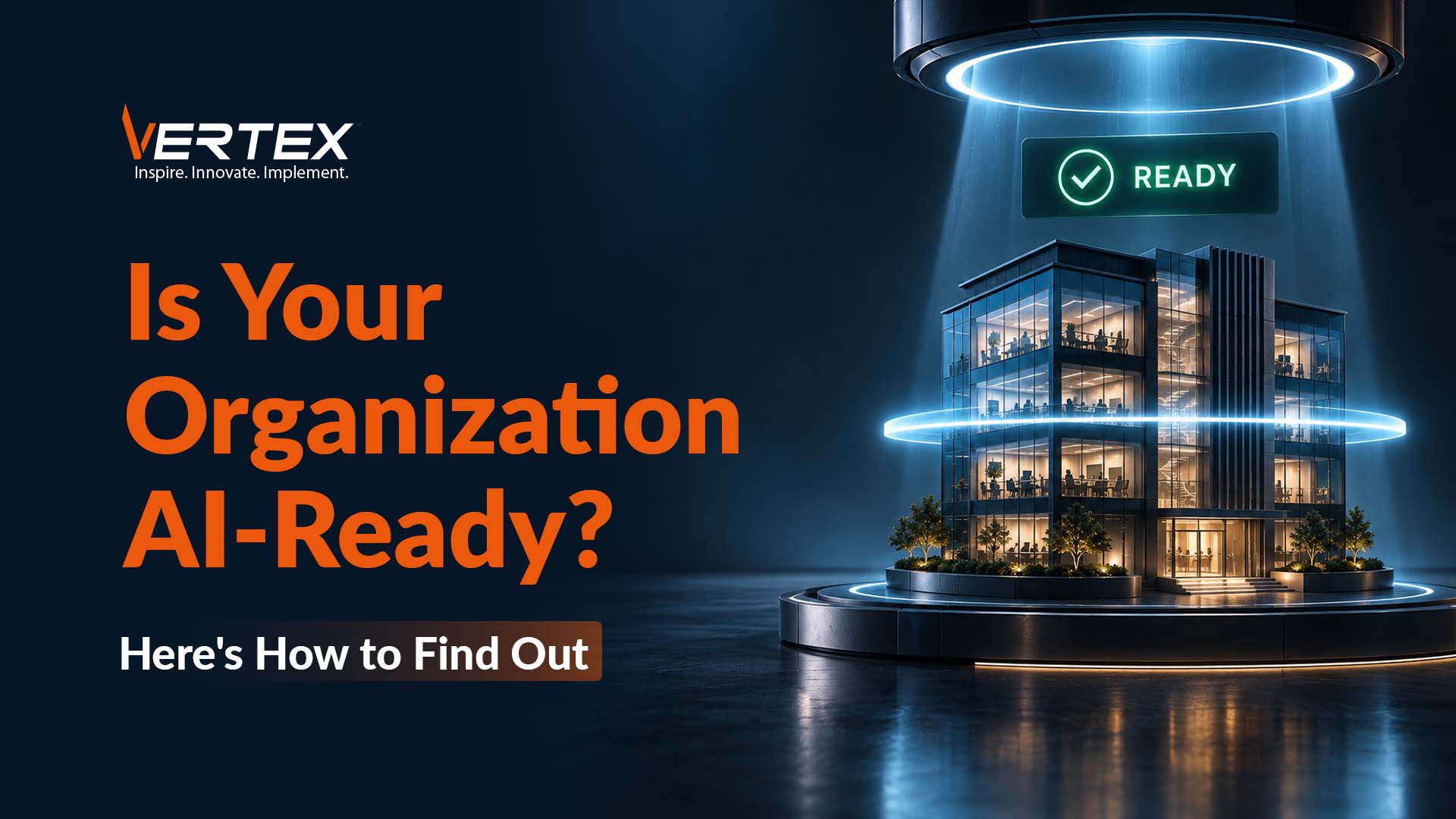
Is Your Organization AI-Ready? Here’s How to Find Out.
- Definition: AI readiness is not defined by how many AI tools a company has purchased. It requires the right data, infrastructure, people, governance and business strategy.
- Adoption gap: McKinsey reports that 78% of organizations now use AI in at least one business function, yet many still struggle to scale AI beyond isolated use cases.
- Data first: Poor data quality costs organizations an average of $12.9 million a year, so if your data is not trusted or integrated, invest in the data foundation before AI.
- Business problem: The strongest AI use cases are tied to measurable outcomes such as predicting equipment failures, reducing customer churn and improving demand forecasting.
- People and scale: The World Economic Forum expects 39% of workers’ skill sets to be transformed or outdated by 2030, so AI literacy, governance and the ability to scale beyond pilots decide readiness.
Every organization wants to become AI-ready, but AI readiness isn’t defined by how many AI tools a company has purchased.
It’s reflected in how people work, how decisions are made and how technology supports everyday business operations.
It requires the right data, infrastructure, people, governance and business strategy.
According to McKinsey’s 2025 State of AI report, 78% of organizations now use AI in at least one business function, up from 55% just a year earlier.
Yet many organizations are still struggling to scale AI beyond isolated use cases and generate measurable business value.
So, how do you know whether your organization is truly ready?
We have prepared a list of six questions that can help you assess your AI readiness.
Is Your Data AI-Ready?
AI depends on data and not just lots of it.
It needs data that is accurate, complete, consistent, well-governed and easily accessible.
If your customer information exists in five different systems, your finance data doesn’t reconcile, or your reporting teams spend hours cleaning spreadsheets before analysis, AI won’t solve those problems.
Instead, it will amplify them.
According to Gartner, organizations estimate that poor data quality costs them an average of $12.9 million annually.
Before deploying AI, organizations should ask:
- Can we trust our data?
- Do we have a single source of truth?
- Is our data integrated across business functions?
If the answer is ‘not yet,’ your first investment should focus on data foundation and not AI.
Are You Solving a Business Problem or Chasing a Trend?
Many AI initiatives begin with a technology-first mindset.
Some in the boardroom says “We should use AI.”
But the better question is “What business problem are we trying to solve?”
The strongest AI use cases are tied to measurable outcomes, such as:
- Predicting equipment failures
- Reducing customer churn
- Automating invoice processing
- Improving demand forecasting
- Detecting fraud
- Enhancing customer service
It’s important to understand that AI should always support a business objective and not become the objective itself.
Does Your Technology Infrastructure Support AI?
AI requires more than a powerful model.
It needs an ecosystem capable of handling large volumes of data efficiently.
If you are responsible in transforming your internal systems and processes, you must ask yourself the following questions:
- Are our systems cloud-enabled?
- Can our applications exchange data seamlessly?
- Are our analytics platforms scalable?
- Can we process data in near real time?
Legacy infrastructure often becomes one of the biggest obstacles to AI adoption.
Modern AI initiatives rely on cloud platforms, APIs, automated data pipelines and scalable analytics environments.
Without these capabilities, even promising AI projects struggle to move beyond the pilot stage.
Are Your Employees Ready to Work with AI?
AI doesn’t replace people.
It changes how people work.
Employees need to understand how to interpret AI recommendations, validate outputs and use new tools responsibly.
According to the World Economic Forum’s Future of Jobs Report 2025, 39% of workers’ existing skill sets are expected to be transformed or become outdated between 2025 and 2030, making reskilling one of the biggest priorities for organizations.
Organizations that invest in AI literacy, change management, and workforce training are far more likely to achieve long-term success than those that focus solely on technology.
Do You Have the Right Governance in Place?
As AI becomes more deeply integrated into business operations, governance becomes essential.
Organizations should establish clear policies around data privacy, security, regulatory compliance, responsible AI usage among others.
While AI introduces tremendous opportunities, it also increases the importance of protecting enterprise data and ensuring responsible decision-making.
Can You Scale Beyond a Pilot Project?
Many organizations successfully build AI proofs of concept.
Far fewer successfully scale AI across departments.
An AI chatbot built for one department may demonstrate potential.
But scaling AI across customer service, finance, operations and sales requires a much stronger organizational foundation.
AI readiness isn’t measured by whether you’ve launched a pilot.
It’s measured by whether you can expand AI confidently across the business.
How Vertex Helps Organizations Become AI-Ready
At Vertex Computer Systems, we help organizations move beyond AI experimentation and build the foundation required for long-term success.
With more than 15 years of experience in digital transformation, data & analytics, Microsoft technologies, cloud modernization, and enterprise integration, Vertex partners with businesses to assess their AI readiness, modernize data platforms, strengthen governance, and identify high-impact AI use cases aligned with business objectives.
Our expertise spans Microsoft Fabric, Azure, Power BI, enterprise data engineering, automation, and AI enablement, helping organizations create scalable ecosystems where AI can thrive.
Rather than starting with technology, we help clients build a clear roadmap from data readiness and infrastructure modernization to AI implementation and enterprise-wide adoption ensuring AI investments translate into measurable business outcomes.
If you’re evaluating your organization’s AI readiness, we can help.
Connect with our experts to assess your current capabilities, identify opportunities and create a practical roadmap for successful AI adoption.
Recent Blogs
3 August, 2026
27 July, 2026
20 July, 2026
13 July, 2026
6 July, 2026
29 June, 2026

22 June, 2026
15 June, 2026
Recent News

26 February, 2026

6 December, 2025

1 August, 2025

2 February, 2025

14 November, 2024

4 November, 2024
1 August, 2024

6 March, 2024