


The Unavoidable Imperative: Balancing Innovation with Responsible AI
- Three pillars: Responsible AI rests on three pillars: responsible data use, transparency and bias mitigation.
- Cost of breaches: According to IBM and the Ponemon Institute, the global average cost of a data breach reached 4.45 million USD in 2023, and healthcare breach costs can reach $11 million.
- Data governance: Data minimization, anonymization and clear consent policies, built on Privacy by Design and regulations like GDPR, make AI systems more trustworthy and compliant.
- Transparency: Complex AI models can become a black box, and the EU AI Act imposes strict transparency requirements on high-risk applications.
- Bias mitigation: Diverse data curation, fairness metrics, human-in-the-loop oversight and ethical review boards help companies avoid legal and reputational risk.
AI is something that will spearhead all the major developments in the coming year.
The development and deployment rate speaks for itself, and then there are constant updates and improvements taking place.
However, this does not come without its consequences; there is always the question of ethical use and development of AI.
The balance between innovation and responsibility is not optional but a necessity for both social and business imperatives.
In this article, we will talk about the three major pillars of responsible AI use.
The three pillars are responsible data use, transparency, and bias mitigation.
The Foundational Pillar: Responsible Data Use
AI is only as good as the data on which it is being trained.
The sheer volume and frequency of the data used present a lot of challenges.
The primary ethical consideration is the use of the data that is being collected.
We also have to consider privacy violations and consumer trust, and then there are several government regulations that organisations have to consider.
Furthermore, if there are no checks on how the data is being collected and stored, then that can also cause issues going forward.
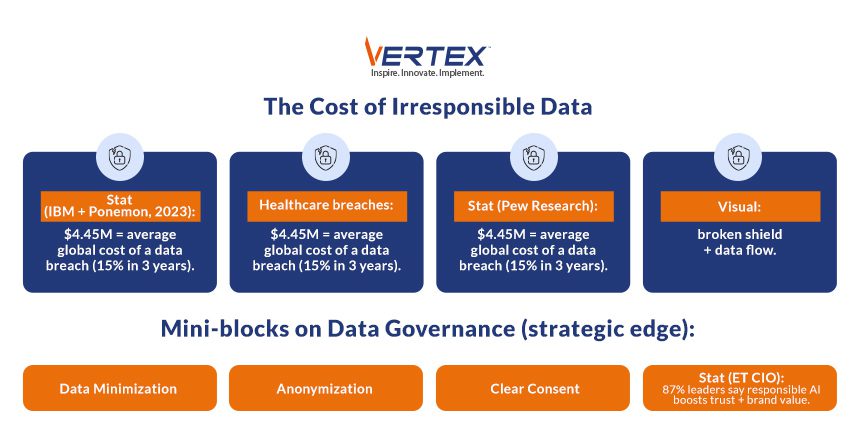
The Financial and Reputational Cost of Irresponsible Data
Data negligence is no longer a theoretical concept; now it actually costs a lot of money if there are any compromises.
According to a study by IBM and the Ponemon Institute, the global average cost of a data breach reached an all-time high of 4.45 million USD in 2023, a 15% increase over the past three years.
This figure, however, does not include the long-term damage to the brand reputation and customer loyalty.
In some regulated industries, such as healthcare, breach costs can reach $11 million.
Furthermore, according to a survey done by the Pew Research Center, 81% of Americans feel they have “very little” or “no” control over the data companies collect about them.
This is a result of periodic data misuse and a clear lack of data governance policies.
The Strategic Imperative of Data Governance
While some companies consider data governance to be a hurdle, there are some companies that are using it to give them a competitive edge.
The latter companies are opting for robust frameworks that are based on the idea of Privacy by Design, and then there are regulations to consider, like the EU’s General Data Protection Regulation (GDPR).
Companies can build their own AI systems that are significantly more trustworthy and compliant with all government policies.
According to a study done by ET(CIO), 87% of business leaders believe that responsible AI practices will lead to increased customer trust and brand value.
For effective data governance, there are key components that cannot be ignored:
- Data Minimization: Keeping a check on all the data that is being collected, and then there should be checks on where the data is being collected.
- Anonymization and De-identification: Companies must make sure that there is no personal information or anything that can be used to identify anyone.
- Clear Consent Policies: Inform users clearly about the data being collected and how it will be used.
When any organization follows all the ethical data practices surrounding AI, the result is always enhanced brand reputation and more trust from the consumer’s end.
The Transparency Challenge: Mitigating the Black Box
AI models have become more intricate and complex, so their decision-making process has become opaque, resulting in “a Black Box.”
The rationale behind a specific output is not easily understood.
This lack of transparency is present in most high-stakes applications, such as loan approvals and medical diagnoses, and it poses ethical and legal challenges.
The solution to this problem is known as Expandable AI, which is better discussed in the article below.
The Business and Regulatory Demand for Transparency
Government and regulatory bodies are making sure that there are no data inconsistencies and breaches.
The EU AI Act classifies AI systems by risk level and imposes strict transparency requirements on high-risk applications.
According to a report done by IDC, 66% of organizations worldwide are exploring the potential of GenAI.
This is mainly because transparent models are much easier to read, more reliable, and easily adaptable to internal stakeholders.
The Tangible Costs of Bias
The financial and reputational costs of algorithmic bias can be catastrophic.
A 2024 study from the Harvard Business Review found that companies that fail to address AI bias face a significant risk of losing market share and customer loyalty.
The study noted that a single, high-profile case of AI bias can lead to a 20-30% drop in consumer confidence and an average of $1 million in fines and legal settlements.
Case law is also building a foundation for legal challenges.
A well-known example is the 2016 ProPublica report on the COMPAS recidivism risk assessment tool, which was found to be biased against Black defendants.
While not a lawsuit, the public outcry highlighted the tangible, real-world harm of biased algorithms.
In another instance, Amazon’s experimental hiring algorithm was scrapped in 2018 after it was found to be biased against female candidates, showcasing the financial and operational waste of biased systems.
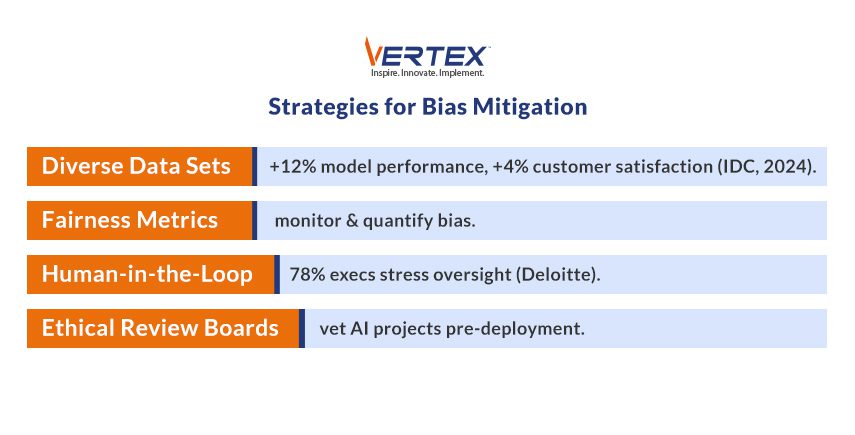
Strategies for Bias Mitigation
Mitigating bias requires a multi-pronged, systemic approach:
- Diverse Data Curation: Actively curating training data sets to ensure they are representative and do not over-index on certain demographics. This may involve synthetically generating data to fill gaps or deliberately balancing existing data. A 2024 IDC report found that organizations using diverse and inclusive data sets in their AI development pipelines saw a 12% improvement in model performance and a 4% increase in customer satisfaction.
- Fairness Metrics: Implementing mathematical fairness metrics to quantify and monitor for bias throughout the AI development lifecycle.
- Human-in-the-Loop Oversight: There should be a subject matter expert who can review and validate the decision of high-stakes AI systems before the final action is taken. Ensuring a human subject matter expert reviews and validates the decisions of high-stakes AI systems before final action is taken. According to a study by Deloitte, 78% of executives believe human oversight of AI is critical for responsible deployment.
- Ethical Review Boards: There should be teams that can cross-check AI projects for ethical implications before they are deployed or used.
When we address biases, companies avoid legal and reputational risk, but they should also develop more robust, equitable, and effective AI models.
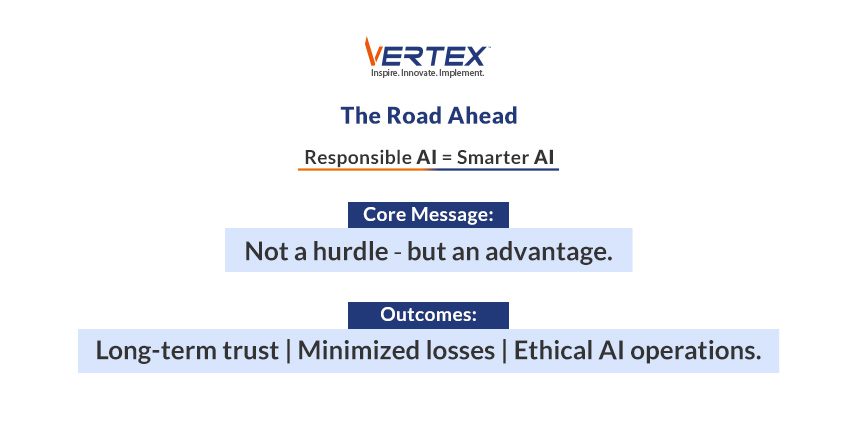
Conclusion
Responsible AI practices should not be considered as a hurdle but a necessity that will help develop the AI landscape even further.
When we build systems on the foundation of responsible data use, transparency, and zero biases, then the organisation can move beyond compliance issues and focus on developing a strategic game plan.
This approach is always beneficial in the long run and can minimise financial losses and reputational damage, and ensure that AI is not only intelligent but also ethical in operation and thinking.
Recent Blogs

3 August, 2026

27 July, 2026

20 July, 2026

13 July, 2026

6 July, 2026

29 June, 2026

22 June, 2026

15 June, 2026
Recent News

26 February, 2026

6 December, 2025

1 August, 2025

2 February, 2025

14 November, 2024

4 November, 2024

1 August, 2024

6 March, 2024